
What is Homelessness?
There is no single definition of homelessness.
Homelessness, often referred to as housing insecurity, occurs on a spectrum or a continuum. This means that it includes people who are sleeping rough or sleeping on the streets and those who may be using emergency shelters or couch surfing (Alberta Interagency Council on Homelessness, n.d).

Pathways into Homelessness
There is also no single pathway into homelessness.
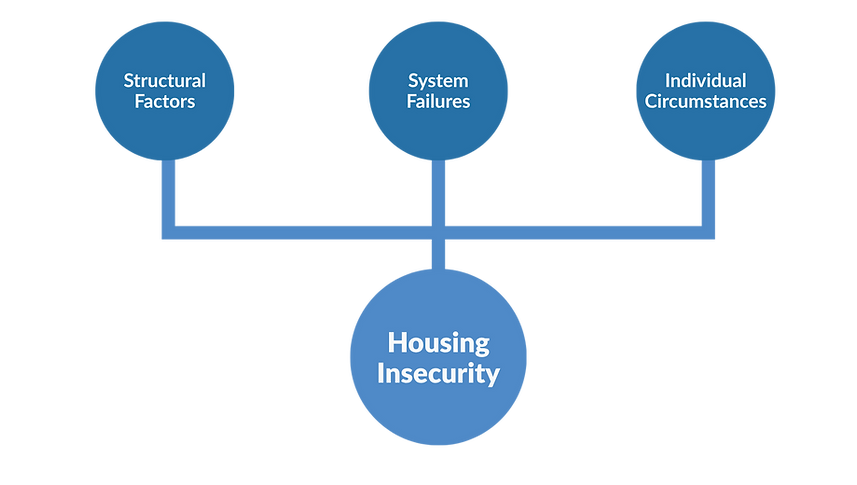
While homelessness is often simplified to the understanding that it results from individual decisions or personal circumstances. In reality, homelessness is rarely the result of a singular factor. Instead it can be understood as the result of overlapping structural factors, system failures, and individual circumstances (Homelessness Hub, nd).
Structural Factors
Structural factors are broader or large-scale, often national issues that can limit opportunities for economic stability or housing. We all experience these factors as they are outside of any one person's control.
Canada's rate of poverty has been rising and deepening. Nationally, families with children are on average living at least $15,000 below the poverty line (Campaign 2000, 2026). As the cost of living continues to rise and incomes remain stagnant, the rates of poverty increase.
This rising economic inequality not only impacts access to secure and stable housing,
but also access to health services, transportation, and mental health services.


System Failures
People experiencing or at risk of experiencing homelessness often interact with multiple systems, When these systems are not communicating or coordinating safe transitions, people can be left without support or services that they need to remain safely and securely housed.
We all see and experience failures like this in our everyday lives, they are not necessarily the result of one person or organization doing something wrong. Instead, they are the results of policies or systems that are not build with people's lived realities in mind.
People may need support from several organizations at the same time, but those services do not always work together and communicate. Sometimes this means that the responsibility of coordinating and communicating with all the organizations in this system falls on the person needing services.
Services can exist and be difficult to access when there is no clear path. This lack of
coordinated services can mean that people fall through the cracks.


Personal Factors
Often this pathway into homelessness if oversimplified to be the sole or primary cause of homelessness for all people. However, these personal factors are only one part of the picture that includes those structural factors and system failures.
Living with a chronic illness, disability, or an ongoing health concern can affect someone's ability to work, manage daily responsibilities, or maintain housing. Furthermore, these chronic health issues can result in medical costs, reduced incomes, and difficult accessing care all increasing barriers to stable and affordable housing.
It's been estimated that nearly 30-40% of adults experiencing homelessness have a form of cognitive impairment, including intellectual disabilities e.g fetal alcohol syndrome or traumatic brain injuries (Brown et al., 2021).
How People in the Lakeland Become Homeless
Pathways into homelessness are rarely simple. Many clients reported more than one factor contributing to housing loss, including unaffordable rent, financial crisis, family or domestic violence, mental health concerns, substance use, justice involvement, and discharge from systems without stable housing in place. These pathways reflect the reality that homelessness is often created by overlapping pressures rather than one single event.

Support & Accountability Can Exist Together.
Supporting someone does not mean pretending that every behaviour is safe or acceptable.
Shelters and community services still have responsibilities around:
-
safety
-
respectful behaviour
-
boundaries
-
the wellbeing of staff and other guests
-
community safety
At the same time, withholding basic support does not remove the underlying housing need.
A safe space or resource like Cold Lake John Howard Society can allow someone to connect with services, replace identification, address legal or health concerns, apply for income, look for housing, reconnect with supports, or simply have enough stability to think about what comes next.